Industry News
 2026.09.18
 Industry News
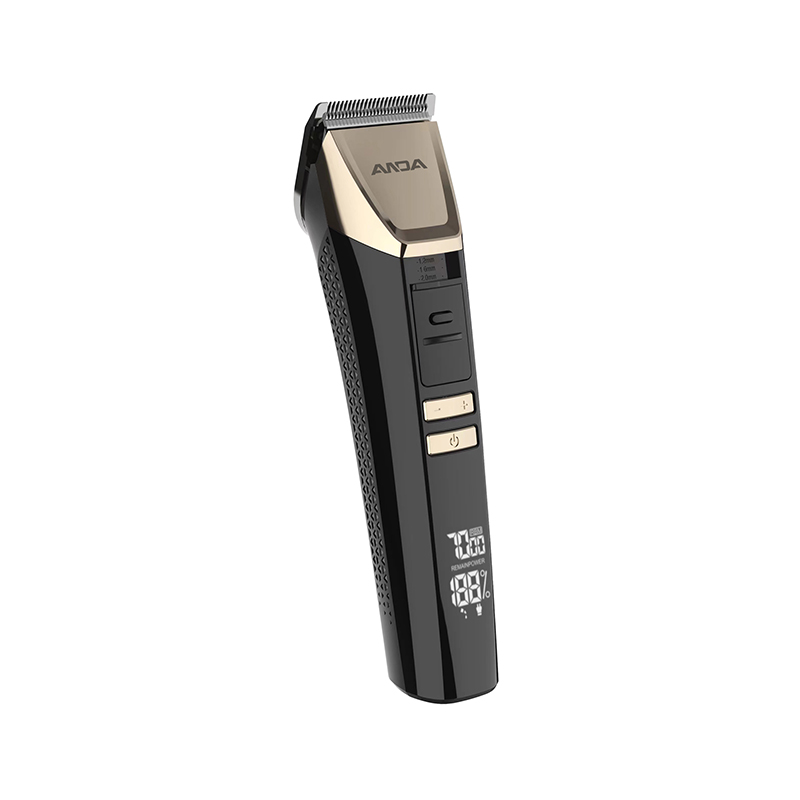
Home hair cutting has become more varied than simply trimming short hair. A clipper may be used for sideburns, neckline cleanup, light shaping, or cutting through a fuller head of hair. Different tasks put different demands on the cutting head, especially when several people in one household share the same device.
The blade is where much of the actual cutting work takes place. Its material needs to retain a usable edge while the cutting surfaces move against each other. At the same time, contact between the parts should remain reasonably smooth during repeated operation.
Hair texture adds another variable. Fine strands can behave differently from coarse or tightly curled hair, while longer hair may enter the teeth in larger sections. A household device therefore needs a blade arrangement that can cope with changes in the material being cut rather than being designed around one fixed condition.
Maintenance also affects blade behavior. Hair particles can collect around the teeth, and a dry contact surface may create more resistance during movement. Cleaning and lubrication become part of ordinary blade care, particularly when the same clipper is used regularly.
Material selection is consequently tied to more than edge hardness. Manufacturers also need to consider the relationship between the blade base, cutting surface, contact area, and the way the complete assembly moves during operation.
The fixed and moving blades perform different jobs. As hair enters the teeth, the moving section travels across the fixed section, creating the cutting action. Material selection can influence how smoothly those surfaces meet and how well the edges retain their working shape.
A practical blade design may assign different functions to different materials:
Using different materials can therefore be a way of balancing several requirements rather than relying on one material for every function. Edge retention, structural support, and surface movement do not necessarily require identical material characteristics.
Friction enters the picture whenever the moving blade travels across its counterpart. Excessive resistance can affect movement and contribute to heat around the cutting head. Hair density can add further variation because thicker sections may require the blades to handle a greater amount of material at once.
A useful way to view cutting performance is to consider the complete interaction. Material, edge condition, surface finish, and movement all contribute to how hair passes through the teeth. Looking at the material alone gives only part of the picture.
The shape of the blade teeth determines how hair reaches the cutting edge. Tooth spacing, edge position, blade thickness, and alignment all influence the path a strand takes before it is cut.
A closer tooth arrangement can guide smaller sections of hair toward the edge, while wider spacing may allow larger sections to enter. Neither arrangement exists independently from the intended use. Home trimming often involves changing directions and hair lengths, so the cutting head needs to remain workable as the device moves around the contours of the head.
Edge geometry has a similar role. A suitable cutting position allows hair to meet the edge rather than simply bending between the teeth. Alignment matters as well. Even a carefully selected material may give inconsistent results when the moving and fixed sections do not meet as intended.
| Blade Feature | Function During Cutting |
|---|---|
| Tooth spacing | Guides hair into the cutting area |
| Edge position | Determines how strands meet the blade |
| Blade alignment | Controls contact between moving parts |
| Blade thickness | Supports the structure |
| Surface finish | Influences movement between surfaces |
Combining materials allows the blade assembly to divide its workload. One material can form the main cutting surface while another provides support or a suitable contact area. Surface treatment may also be used to alter how the parts move against one another.
Friction becomes especially relevant during repeated operation. Two surfaces that slide together generate resistance, and the amount of resistance can influence movement and heat. A well-matched combination aims to keep the interaction controlled rather than treating the cutting edge as the only factor that matters.
Surface condition has a role of its own. Small differences in smoothness can change how easily the moving section travels across the fixed section. Poor alignment or an uneven surface may increase resistance even when the selected materials are otherwise suitable.
Regular care completes the picture. Removing trapped hair helps keep the teeth clear, while appropriate lubrication supports contact between moving surfaces. For a household clipper, material choice, blade construction, and maintenance are closely connected parts of the same cutting process.
Hair does not behave in the same way during every haircut. Fine, straight strands may pass through the teeth with relatively little resistance, while coarse hair can place more pressure on the cutting area. Curly hair brings another variation because the strands may approach the blade from different directions.
Length also changes the way hair enters the cutting head. Longer sections can gather around the teeth before reaching the edge, whereas short trimming usually involves smaller amounts of hair at a time. A blade arrangement designed for household use therefore needs to remain workable across different cutting situations.
Cutting technique adds another layer. Moving the clipper slowly through a dense section gives the blade more time to process the hair, while a quick movement may leave some strands behind. The angle of the device can also change how effectively hair enters the teeth.
For shared household use, several factors may need consideration:
A suitable material combination therefore needs to work alongside the actual cutting method. Blade performance is shaped not only by what the blade is made from, but also by how hair reaches it and how the user moves the device.
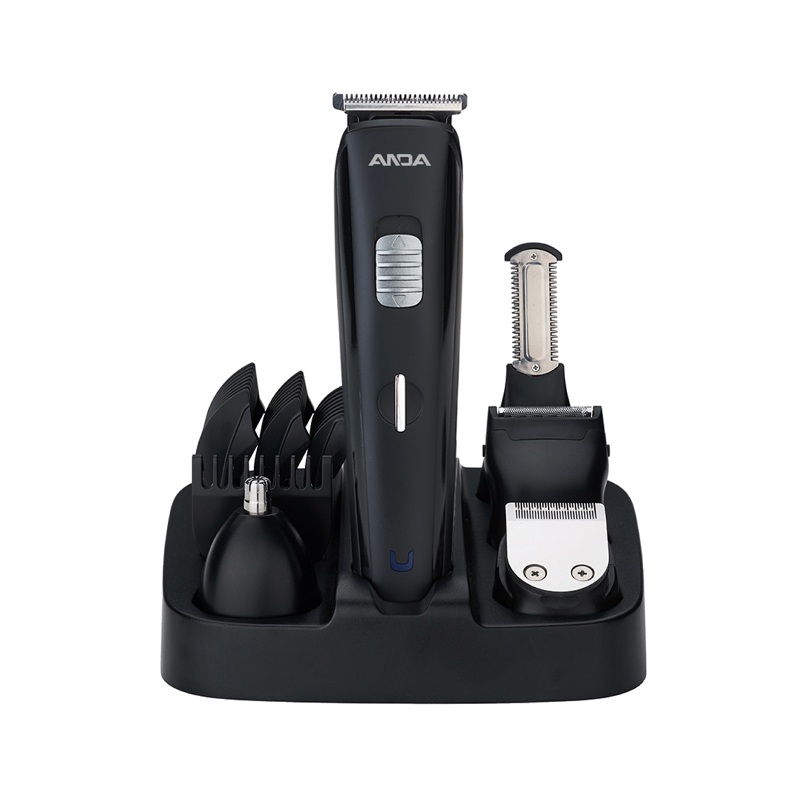
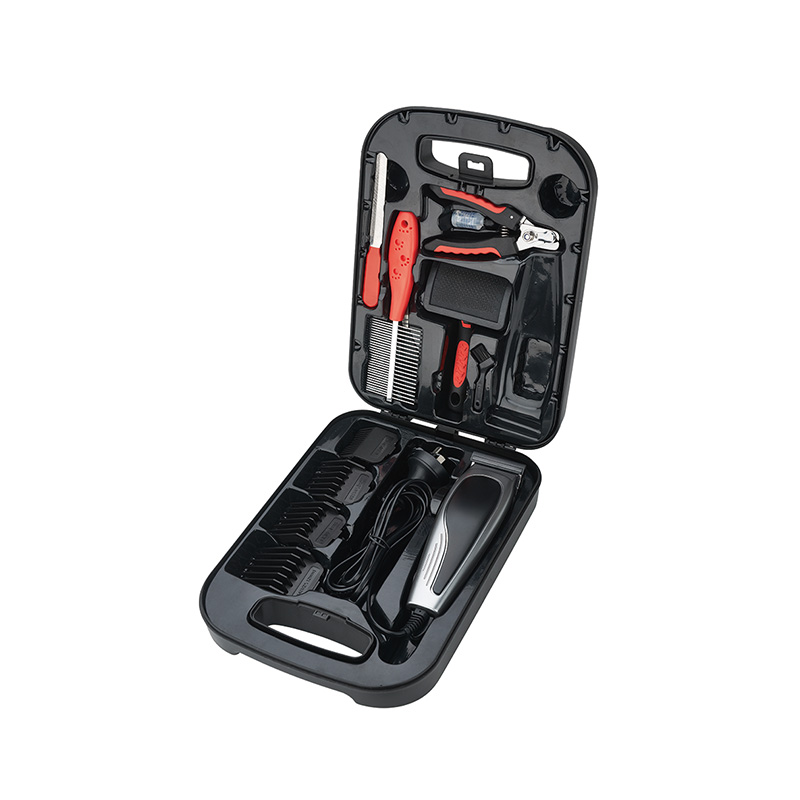
An Electric Hair Clippers Set usually involves more than the main clipper body. Different comb attachments, adjustable cutting components, cleaning tools, and other accessories can change how the device is used around the home.
Guide combs are particularly relevant because they control the distance between the blade and the hair. Changing the attachment can turn a close trim into a longer cut without requiring a different cutting head. The blade still performs the actual cutting, while the attachment influences how much hair reaches it.
Accessory design needs to match the cutting system. A guide comb that does not sit firmly can affect the distance between the hair and blade. Poor alignment may also change the way hair enters the teeth, which can make an otherwise suitable cutting head harder to use.
A household set may support several tasks, such as:
The combination of attachments can make one device more adaptable, yet the underlying blade remains important. Accessories cannot compensate for a cutting surface that is poorly aligned or difficult to maintain.
Storage has a practical role as well. Keeping the cutting head clean and protected can reduce the accumulation of hair and dust between uses. A compact arrangement for attachments can also make routine maintenance easier, particularly when several pieces are used during one haircut.
Blade production involves several stages, and small differences between components can influence how the finished cutting head operates. Material preparation, shaping, surface treatment, and assembly all need to remain compatible with one another.
The cutting edge requires careful processing because its shape directly affects contact with the hair. At the same time, the fixed and moving sections need to meet within the intended position. A slight difference in alignment can alter friction or change the way hair passes through the teeth.
Surface treatment is another consideration. A smoother contact surface may reduce resistance between moving components, while the treatment also needs to remain stable during repeated use. The selected process depends on the material and the intended structure of the blade.
Quality checks can cover several areas:
Assembly deserves attention because even well-processed components can behave differently when fitted incorrectly. The blade needs to remain secure while allowing the moving section to travel freely.
Manufacturers also need to consider maintenance during product development. A cutting head that is difficult to clean may collect hair around areas that are important for movement. Simple access to the blade area can make routine care more manageable for household users.
Blade development is gradually becoming more connected with the wider design of the clipper. Material selection, tooth geometry, surface treatment, motor movement, guide combs, and maintenance requirements all influence how the cutting system behaves in everyday conditions.
Rather than viewing blade material as an isolated specification, product development can consider the complete path from hair entry to cutting. A strand needs to reach the teeth, meet the cutting edge, and pass through the blade without unnecessary resistance. Each stage places a different requirement on the design.
Material combinations can also support different functions within the same cutting head. A structural material may provide the base, while another material or surface treatment can focus on the cutting area or contact surface. The choice depends on the intended construction and the type of use expected from the device.
Household convenience continues to influence design decisions. Users may not have specialist tools or extensive experience with blade adjustment. Easy cleaning, accessible maintenance, stable attachments, and straightforward operation can therefore matter alongside cutting performance.
For manufacturers, the challenge lies in keeping the individual parts compatible. A change to the blade material may affect surface treatment. A change in tooth geometry can alter the required movement between the blade sections. An attachment can also change how hair reaches the cutting area.
Home Use Hair Clippers are consequently being developed as complete cutting systems rather than as a motor combined with a simple blade. The interaction between material, structure, accessories, and maintenance remains central to how a clipper handles different household cutting tasks.
Recommended Products

No.377. Fourth Avenue, Binhai Park, Economic-Technological Development Zone, Wenzhou, Zhejiang, China.

+86-577-88912812

+86-577-88912822

anda1@andaelectric.com
anda6@andaelectric.com
anda7@andaelectric.com
Copyright © Zhejiang Anda Electric Co., Ltd. Rights Reserved.
Electric Hair Clipper Manufacturer



 English
 Español
 русский