Industry News
 Home / News / Industry News / Which Electric Pet Grooming Clipper Fits Thick Coats vs Short Fur Breeds
  2026.09.25
 Industry News
Coat variation across breeds goes beyond length. Several distinct categories show up in regular grooming work.
These differences affect three things in particular: how much resistance the blade meets, how much heat builds up during a session, and how many passes are needed to achieve an even result. A coat that offers low resistance allows faster movement and less strain on the motor. A dense coat slows progress and raises the temperature at the cutting surface, which in turn affects how long a session can continue before a break is needed.
Torque matters here. When a blade meets resistance, the motor has to maintain speed rather than bog down. A motor that slows under load leaves uneven patches and pulls at the coat instead of cutting through it. Rotary motors tend to hold speed under sustained resistance, which suits longer sessions on dense fur.
Blade geometry plays a role as well. A blade designed for dense undercoat moves through the material without trapping it against the skin. Skip‑tooth designs help break up matted or tightly packed sections before a finishing pass. Working in layers rather than trying to cut to final length in one motion reduces strain on both the blade and the animal.
Heat is a persistent concern. Dense coats require more passes, and more passes mean more friction at the cutting surface. A blade that becomes warm can cause discomfort, which makes the animal more likely to move, which in turn makes the work harder. Cooling intervals are not optional in these sessions — they are part of the process.
Matted sections deserve separate handling. Clipping directly through a mat pulls at the skin beneath it. Breaking the mat into smaller sections with a skip‑tooth blade, or working from the outer edge inward, keeps the process manageable. In some cases, the mat is better removed with scissors or a separate tool before the clipper is introduced at all.
Short coats shift the priorities. Cutting power becomes less of a concern, and precision moves to the front.
A narrower blade head allows work around contours — paws, faces, sanitary areas — where a wider blade would be awkward. Fine blade gaps reduce the chance of catching loose skin, which matters on breeds with less coat covering the underbelly and inner legs.
Noise and vibration take on greater weight. Short‑coated breeds often include animals that are alert to sound, and a clipper that runs loudly can make a session difficult before any cutting begins. Lower‑vibration operation tends to keep the animal settled, which in turn allows steadier work.
Weight and balance matter for a different reason. Short coats usually mean shorter sessions, but those sessions often involve more maneuvering. A lighter unit that can be turned and repositioned easily suits this kind of work better than a heavier tool that holds speed well but tires the hand during detailed passes.
For these breeds, the goal is clean lines and minimal stress rather than power through dense material.
Some characteristics matter regardless of the coat in front of the groomer.
Motor type shapes how a clipper responds to load. Rotary motors maintain speed under resistance and suit dense coats. Magnetic or pivot‑based motors run with less vibration and suit precision work. The choice follows from the coat rather than from a general preference.
Blade material and coating affect how long an edge holds up and how much heat reaches the skin. Ceramic edges resist heat buildup but can be brittle. Stainless holds up to repeated use. Titanium‑based coatings reduce friction at the surface. Each has a place depending on the workload.
Corded versus cordless operation involves a straightforward trade‑off. Corded units provide consistent power without runtime limits, which suits long sessions on dense coats. Cordless units offer freedom of movement, which suits detailed work and animals that are difficult to position.
Noise level influences how settled an animal remains. Quieter operation reduces stress, and a calmer animal makes every task easier regardless of coat type.
Weight and balance determine how long a session can continue before fatigue sets in. This applies to the handler as much as the animal.
Cleaning and maintenance routines differ in frequency but not in importance. Hair and debris accumulate in the blade assembly, and lubrication keeps cutting surfaces moving freely. A tool that is maintained between sessions performs more consistently than one that is not.
| Feature | Suited to Dense Coats | Suited to Short Coats |
|---|---|---|
| Motor type | Rotary, holds speed under load | Magnetic or pivot, low vibration |
| Blade head width | Wider for coverage | Narrower for contour work |
| Blade gap | Moderate to wide | Fine to avoid catching skin |
| Noise level | Tolerable if animal is calm | Lower noise preferred |
| Weight | Balanced for longer sessions | Lighter for maneuvering |
| Power source | Corded for sustained output | Cordless for freedom of movement |
| Cooling needs | Frequent intervals | Occasional |
Blade selection does as much work as the clipper itself. The same unit behaves differently depending on what is attached to the cutting end.
Skip‑tooth blades are built for dense or matted sections. The gaps between teeth allow the blade to move through tangles in stages rather than trying to sever everything at once. This reduces pulling and keeps the blade from binding. Working through a matted area with a skip‑tooth first, then following with a finer blade, produces a more even result than attempting the full cut in one pass.
Fine‑tooth blades handle finishing work. They leave cleaner lines on short coats and work well around faces, paws, and sanitary areas where precision matters more than speed. On dense coats, a fine‑tooth blade used too early can trap fur and stall progress.
Guard combs extend the range of a single blade by holding it at a set distance from the skin. On longer coats, this allows consistent length without repeatedly adjusting the blade assembly. The comb also reduces the chance of cutting too close, which matters on animals with sensitive skin or thin coats in certain areas.
Adjustable blade assemblies cover a range of lengths without swapping parts. They suit breeds that need different lengths in different regions — shorter around the sanitary area, longer along the back and sides. The trade‑off is that adjustable mechanisms add complexity and can require more careful cleaning.
In practice, a full groom on a dense‑coated animal often involves more than one blade. Starting with a skip‑tooth to clear the bulk, switching to a medium blade for body work, and finishing with a fine blade around the face and paws is a common sequence. Short‑coated breeds may need only one or two blades for the entire session, but the ones chosen need to be suited to close work.
Technique matters as much as equipment, and comfort on both ends of the session depends on how the work is paced.
Reading stress signals is part of the job. An animal that pulls away, tenses, or vocalizes is communicating something — blade heat, a pulled tangle, or simple fatigue. Continuing through those signals tends to make the next session harder, since the animal associates the clipper with discomfort.
Blade heat deserves regular attention. Touching the blade to the back of a hand between passes gives a quick sense of whether it has warmed beyond what is comfortable. Dense coats generate heat quickly, and cooling intervals are part of managing that. Some blades can be swapped for a cool spare while the warm one rests.
Repeated passes over the same area cause irritation. Working methodically across the body rather than circling back over the same patch reduces friction and produces a more even result. On sensitive areas, a lighter touch and a finer blade do more than extra pressure.
Working with the coat direction rather than against it keeps the blade moving freely. Going against the grain can produce a closer cut, but it also increases resistance and heat. The choice depends on the desired result and the animal's tolerance.
Breaks serve a purpose beyond rest. They allow the blade to cool, the animal to settle, and the handler to check progress. For animals that find grooming stressful, splitting the work across more than one sitting is often better than pushing through a long session.
A clipper that is maintained between sessions performs differently from one that is not, regardless of the coat it works on.
Cleaning the blade assembly after each use removes hair and debris that would otherwise accumulate and interfere with cutting. A small brush and a cloth are enough for routine work. Debris left in place can cause the blade to drag, which increases heat and reduces cutting efficiency.
Lubrication keeps the cutting surfaces moving freely against each other. A drop of suitable oil at the blade junction, applied regularly, reduces friction and extends the life of the edge. Over‑lubrication attracts hair and dust, so a modest amount applied consistently works better than occasional heavy application.
Blade replacement follows from use rather than from a calendar. A blade that pulls rather than cuts, requires more passes, or leaves uneven results is telling the handler something. Sharpening can extend the life of a blade that is otherwise in good condition, though repeated sharpening eventually changes the geometry.
Storage conditions matter more than they appear to. A blade left exposed to moisture or dust deteriorates faster than one kept in a case. For tools used regularly, a dedicated storage spot reduces the chance of damage between sessions.
Heavy use on dense coats accelerates wear on all these fronts. Lighter use on short coats extends the interval between maintenance steps. Adjusting the routine to match the workload keeps the tool in condition without unnecessary effort.
Coat assessment comes before equipment selection, not after. The texture, density, and length of the fur in front of the groomer determine what the tool needs to do, and the differences between coat types are wide enough that a single configuration rarely covers everything.
Dense coats point toward torque, blade geometry suited to undercoat, and regular cooling intervals. Short coats point toward precision, quieter operation, and maneuverability around contours. Both benefit from maintenance habits that keep cutting surfaces clean and lubricated.
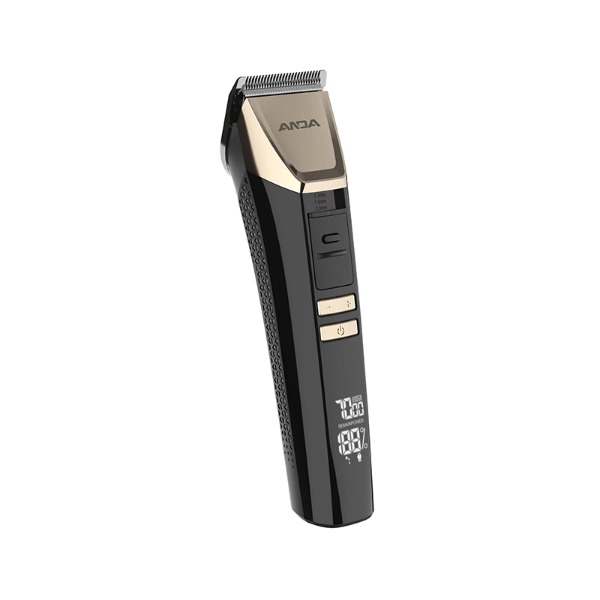
An Electric Pet Grooming Clipper performs well when matched to the coat it is working on rather than chosen on general impressions. The same principle applies to blade selection, guard combs, and session pacing. Each decision follows from what the coat requires.
Recommended Products

No.377. Fourth Avenue, Binhai Park, Economic-Technological Development Zone, Wenzhou, Zhejiang, China.

+86-577-88912812

+86-577-88912822

anda1@andaelectric.com
anda6@andaelectric.com
anda7@andaelectric.com
Copyright © Zhejiang Anda Electric Co., Ltd. Rights Reserved.
Electric Hair Clipper Manufacturer



 English
 Español
 русский